Sociology Minor
Get the analytical tools to make sense of how people, groups, and institutions actually interact — inequality, gender, race, family, work, culture — in 18 credit hours that fit any major.

Program Overview
The sociology minor at Shawnee State University equips students with analytical tools and sociological insight to explore how individuals, groups, and institutions interact in a diverse and changing world. Through this minor in sociology, you will learn to critically examine contemporary issues such as inequality, gender roles, family dynamics, race and ethnicity, and urban development.
At A Glance
Sociology Minor
Degree
Minor
Format
On campus
Length
Typically completed alongside a bachelor's degree
Credits
18 credit hours
Why Study Sociology Minor at Shawnee University
You take three core courses, then choose one course each from three elective groups — so the minor lets you steer toward inequality and work, family and gender, or culture and race depending on what you care about.
Sociology is a strong complement to majors in psychology, political science, criminal justice, communication, education, and business — any field where understanding how groups behave is part of the work.
Coursework develops critical thinking and research skills employers and graduate programs ask for: collecting evidence, interpreting data, and writing about social problems clearly.
Small classes and faculty who know your name make it easier to ask questions, push back, and get useful feedback on your work.
The Sociology Minor is 18 credit hours. No more than 9 hours may count toward your major. A grade of C or higher is required in all courses, and pass/no-credit grades don't apply. MATH 1500 (Principles of Statistics) is strongly recommended.
- Core (9 credit hours): SOCI 1101 — Introduction to Sociology; SOCI 2205 — Current Social Problems; SOCI 2206 — Social Institutions
- Group 1 (3 credit hours): Choose one of Social Psychology; Urban Sociology; Sociology of Work; Social Theory; Social Stratification
- Group 2 (3 credit hours): Choose one of Gender Socialization; Human Sexuality; Sociology of the Family
- Group 3 (3 credit hours): Choose one of Principles of Cultural Anthropology; Sociology of Culture; Sociology of Appalachia; Race and Social Control
- Psychology majors who want a group- and institutions-level lens to complement individual-level work
- Political Science and Public Policy majors interested in how social systems shape policy outcomes
- Social Work majors who want sociological grounding alongside their practice training
- Education majors preparing to teach across diverse communities
- Communication majors working on stories about communities, inequality, or culture
- Anyone planning graduate study in the social sciences, or careers in law, journalism, social services, recreation, counseling, or business
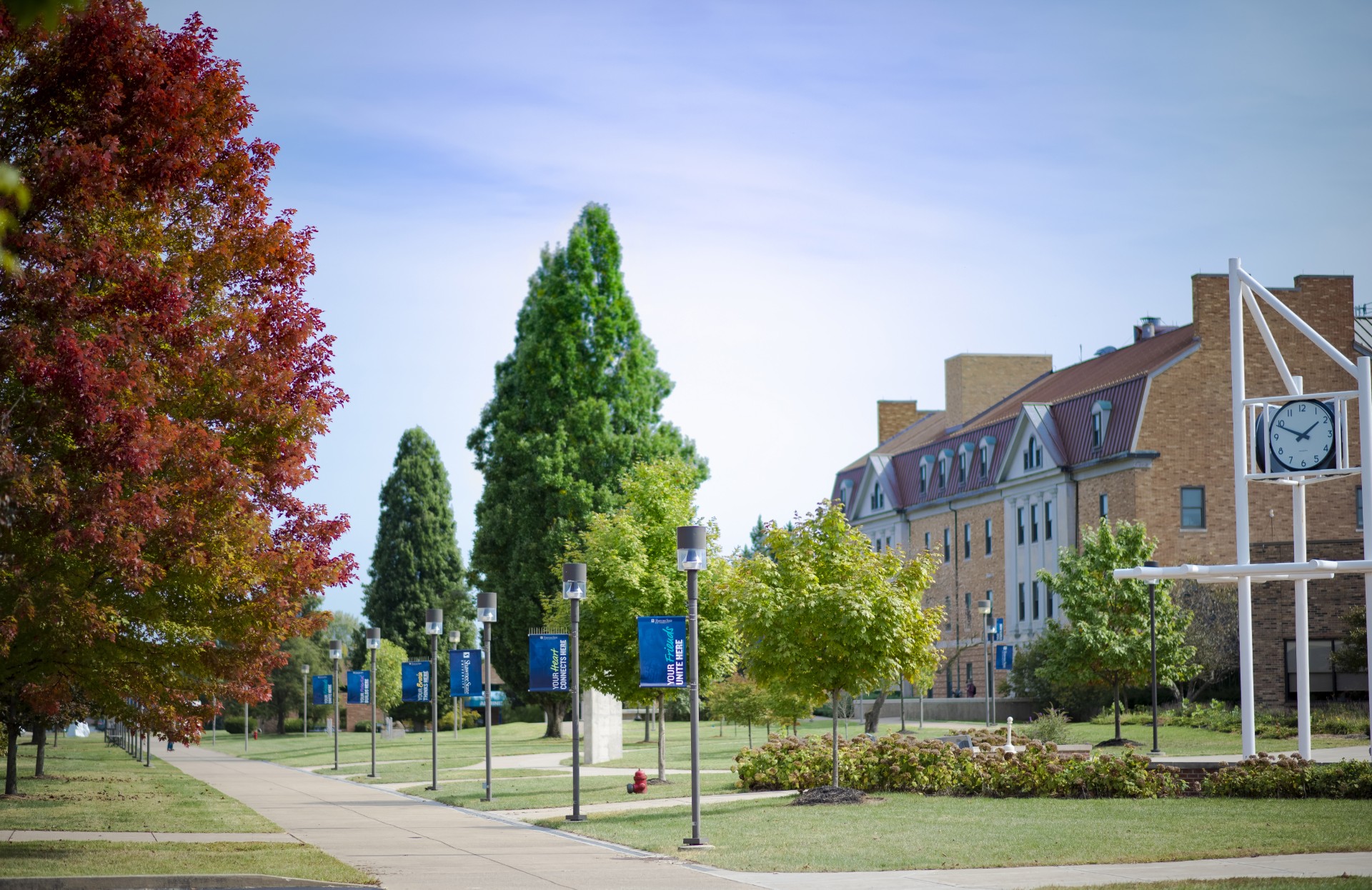
Courses meet on Shawnee State's Portsmouth campus, primarily in Massie Hall.
Sociology Minor Frequently Asked Questions
Psychology focuses on the individual — thought, emotion, behavior. Sociology focuses on groups, institutions, and the social systems people live inside. The two complement each other well, and many students take coursework in both.
MATH 1500 (Principles of Statistics) is strongly recommended because sociologists work with data. It's not strictly required for the minor itself, but it helps.
Yes — it shows graduate programs you've taken core sociological theory and methods, and it's a solid background for graduate study in the social sciences, social work, law, education, and public policy.
Courses are offered on campus; check the current schedule for any online or hybrid sections.
