Economics Minor
Add the analytical toolkit employers and grad programs look for — supply and demand, data interpretation, policy analysis — in 15 credit hours that fit alongside any major.
Program Overview
The economics minor at Shawnee State University gives students the opportunity to study how individuals, businesses, and governments make decisions in a world of limited resources. Open to students in any major, this 15-credit-hour minor in economics strengthens critical thinking, data interpretation, and decision-making skills that are highly valued across industries.
Whether you're interested in careers in banking, finance, public policy, law, or business, the economics minor provides foundational knowledge in economic theory and practical tools for real-world application. You'll explore both microeconomics and macroeconomics, then build on that knowledge through upper-level economics electives in areas like development, labor, international trade, or public finance.
At A Glance
Economics Minor
Degree
Minor
Format
On campus
Length
Typically completed alongside a bachelor's degree
Credits
15 credit hours
Why Study Economics Minor at Shawnee University
You build a solid base in micro and macro, then choose three upper-level electives — money and banking, labor, international trade, development, public finance, econometrics — to focus on what you want to do next.
The skills employers actually call out — data interpretation, structured reasoning under uncertainty, decision-making — are exactly what economics teaches.
Strong preparation for law school, MBA programs, and graduate work in public policy or business.
Economics is one of the most common pre-law and pre-MBA backgrounds for a reason. Pairs cleanly with majors across business, political science, history, criminal justice, sociology, health sciences, and mathematics.
The Economics Minor is 15 credit hours. A minimum grade of C is required in each course, and no more than 9 credit hours may overlap with courses counted toward a major.
- Core (6 credit hours): ECON 2201 — Principles of Microeconomics; ECON 2202 — Principles of Macroeconomics
- Electives (9 credit hours): Choose three upper-level courses (3000–4000 level), including Intermediate Micro, Intermediate Macro, Money and Banking, History of Economic Thought, Economic History of the U.S., Managerial Economics, Labor Economics, Economic Development, Comparative Economic Systems, Public Finance, International Economics, Econometrics, and Special Topics
Economics is a versatile pairing — especially valuable for students heading into public service, law, policy, research, or graduate or professional school.
- Business and Finance majors looking to deepen their analytical and policy grounding
- Political Science majors interested in economic policy and political economy
- History majors interested in economic forces shaping events
- Criminal Justice and Sociology majors who want quantitative tools for studying inequality and labor markets
- Health Sciences majors interested in healthcare economics and policy
- Mathematics majors looking for an applied complement to their major
- Pre-law students and anyone considering an MBA or graduate program
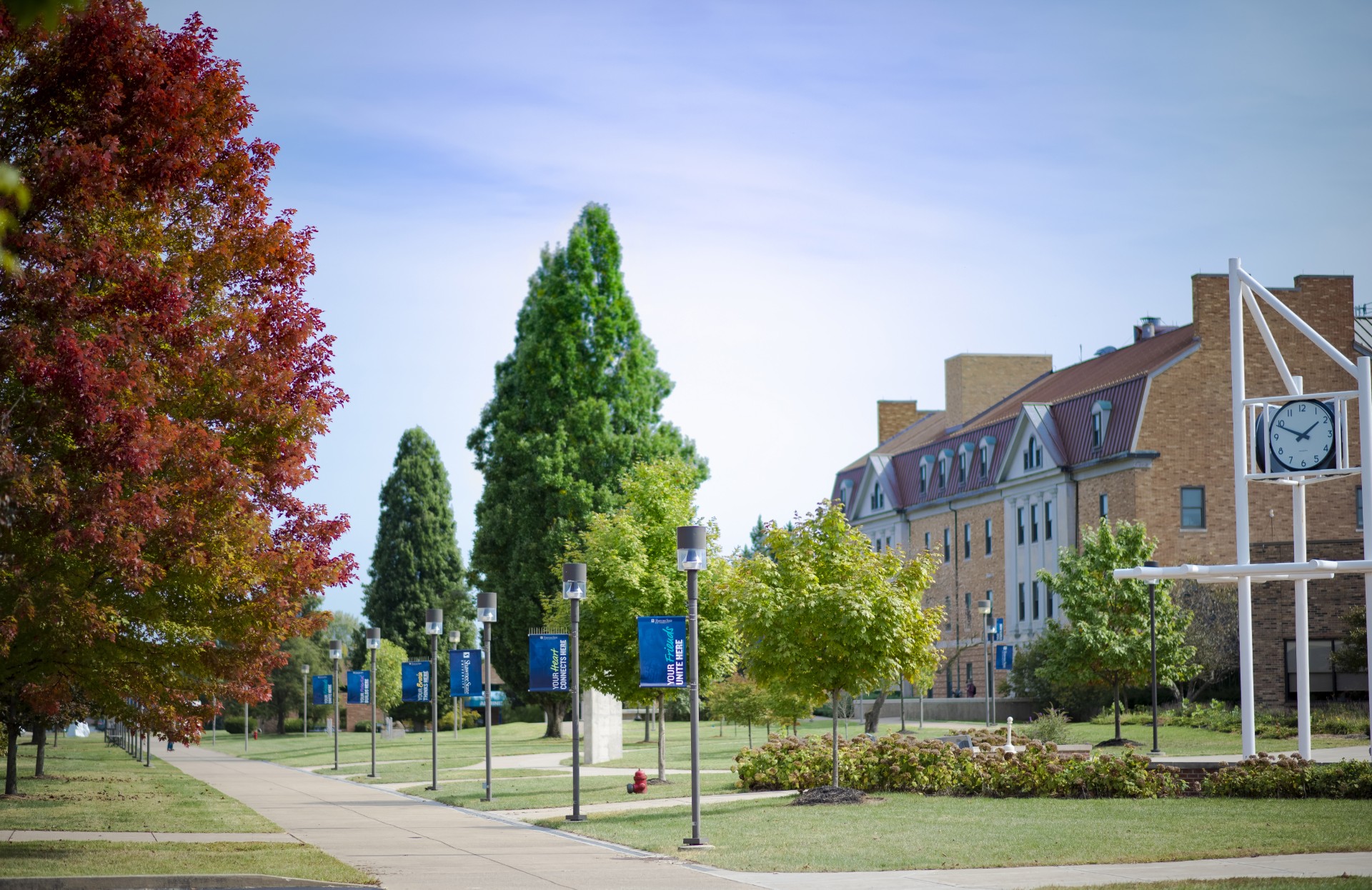
Courses meet on Shawnee State's Portsmouth campus, primarily in Massie Hall.
Economics Minor Frequently Asked Questions
The core principles courses are accessible without advanced math. Upper-level electives like Econometrics use statistics; talk with your advisor about sequencing if you're planning to take quantitative electives.
Yes. Economics is one of the most common and respected pre-law and pre-MBA undergraduate backgrounds, and the minor signals quantitative comfort and structured reasoning.
No more than 9 credit hours can double-count between the Economics minor and your major. Your advisor can help you map this.
Courses are offered on campus; some sections may be available online or hybrid. Check the current schedule and confirm with your advisor.
