Religious Studies Minor
Take an academic, comparative look at the religions shaping politics, culture, and conflict around the world. Eighteen credit hours of history and philosophy; six courses; fits any major.
Program Overview
The religious studies minor at Shawnee State University invites students to examine religious traditions from around the world through an academic, comparative, and critical lens. As religion influences everything from politics and law to culture and conflict, understanding global belief systems is essential for anyone seeking to engage with today’s complex and interconnected world.
In this 18-credit-hour minor in religious studies, students explore diverse religious movements and traditions—including Hinduism, Christianity, Islam, and alternative religions—while learning to evaluate religion’s role in both historical and contemporary societies. Religious studies courses blend perspectives from history and philosophy, offering students a well-rounded approach to the study of faith, culture, and human thought.
Whether you're preparing for graduate school or looking to add cultural competency to your resume, this religious studies minor enhances your ability to think critically, engage respectfully, and lead thoughtfully in a variety of professional fields.
At A Glance
Religious Studies Minor
Degree
Minor
Format
On campus
Length
Typically completed alongside a bachelor's degree
Credits
18 credit hours
Why Study Religious Studies Minor at Shawnee University
Coursework is comparative and academic — you'll study Christianity, Islam, Hinduism, alternative religious movements, and the philosophy of religion side by side, not just one tradition.
Religion drives or shapes a huge share of political, legal, cultural, and humanitarian work happening in the world. Having an academic understanding of it is real preparation, not just curiosity.
Courses blend history and philosophy, so you get both the storyline of how traditions developed and the conceptual tools to think clearly about belief, ethics, and identity.
The minor pairs well with any major where you'll work across cultures — law, medicine, education, journalism, social services, public policy.
The minor is 18 credit hours — six courses chosen from a curated list across history and philosophy. A grade of C or better is required in all courses; no more than 9 credit hours may double-count with a major.
- Choose any six (18 credit hours) of: HIST 3170 — Alternative Religions and Cults; HIST 3177 — Early Christianity; HIST 3300 — Christianity in Early America; HIST 3400 — History of Hinduism; HIST 3420 — The Aum and the Crescent: Islamic Crusades in India; HIST 3550 — Islam: Religion, Politics, and Society; PHIL 2230 — Philosophy of Religion
- Coverage spans world religions, alternative religious movements, and the philosophical study of religion
- History, Sociology, and Anthropology majors who want a comparative religion lens
- Philosophy and English & Humanities majors interested in belief, ethics, and culture
- Criminal Justice and Political Science majors heading into work shaped by religion and policy
- Health Sciences majors who'll care for patients from many religious backgrounds
- Communication majors covering global news, culture, or interfaith work
- Pre-law, pre-medicine, and graduate-school-bound students broadening their cultural competency
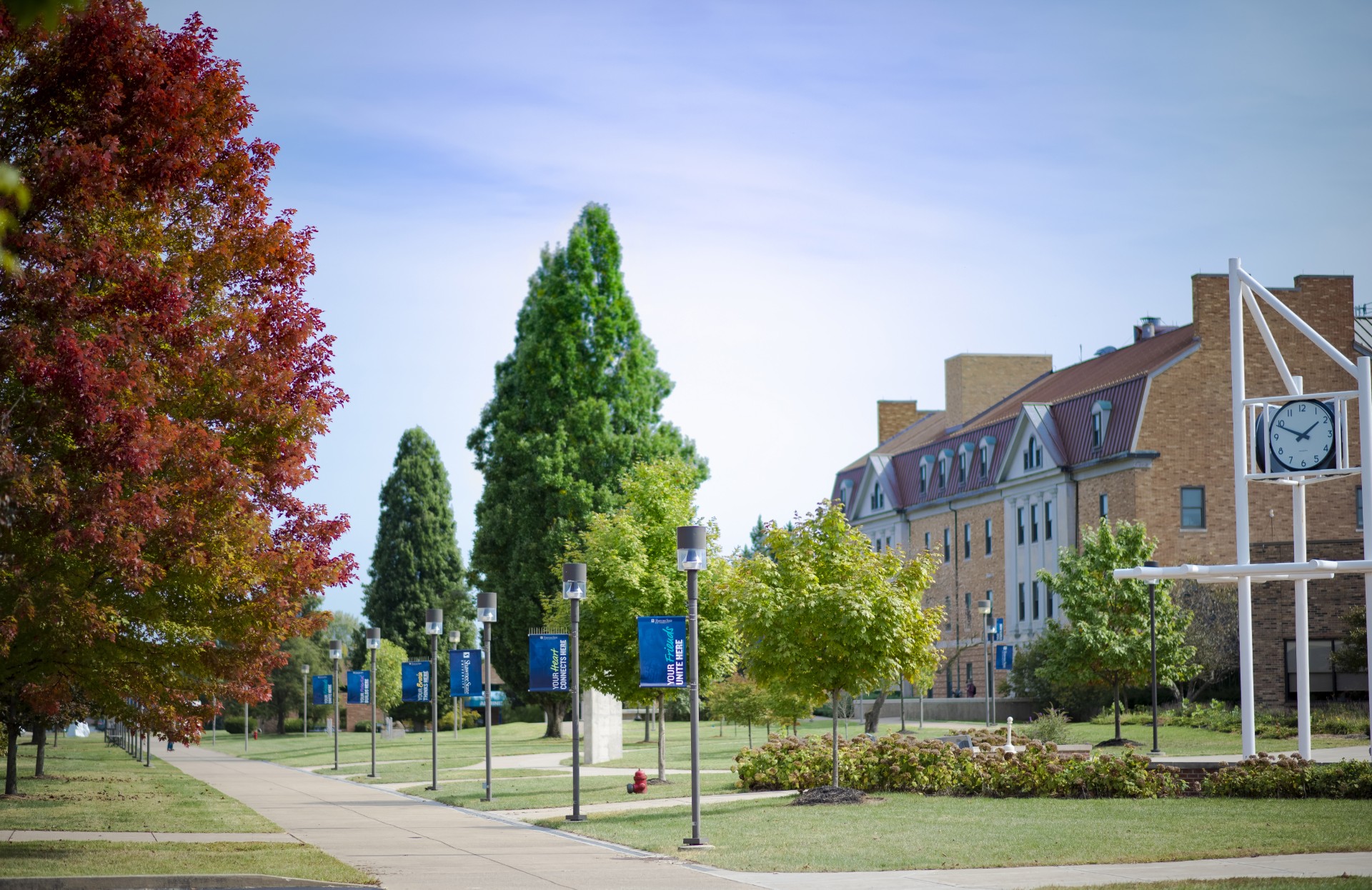
Courses meet on Shawnee State's Portsmouth campus, primarily in Massie Hall.
Religious Studies Minor Frequently Asked Questions
Academic. The courses examine religious traditions comparatively and critically, drawing on history and philosophy. Students of any background — religious or not — take the minor.
No prior background is required. The courses are designed to be accessible to students from any major and any starting point.
Religion is central to many ongoing legal, cultural, and policy debates. A minor signals cultural literacy and the ability to think carefully about belief systems — both valued in law school, divinity programs, public policy, and the humanities.
Courses are offered on campus; check the current schedule for any online sections.
Ready to take the next step?
Request more information about the Religious Studies Minor program at Shawnee State.
