Botany Minor
Learn how plants are built, how they function, and how they shape ecosystems — and add a credential that strengthens any biology, environmental, or pre-health degree.

Program Overview
Shawnee State University's Minor in Botany is perfect for students who have a strong interest in botanical sciences. This program provides a solid foundation in key areas of plant study. You'll learn about plant anatomy (how plants are built), physiology (how they function), taxonomy (how they're classified), and even production (how they're grown). The minor requires 20 hours of courses. This includes 12 hours of required botany core courses, six hours from a list of five plant taxonomy courses, and two hours from applied plant economics, giving you a well-rounded understanding of the plant kingdom.
Adding a Botany minor can be an incredibly valuable addition to many other majors. For example, if you're studying environmental science, agriculture, chemistry, or even fields like art or design, understanding plants can open new perspectives and career paths. Knowledge of botany is crucial for careers in conservation, sustainable agriculture, pharmaceutical development, landscape design, and much more. It helps you develop strong observational skills, scientific reasoning, and an appreciation for ecosystems.
At Shawnee State University, pursuing a Botany minor comes with some distinct advantages. You'll benefit from smaller class sizes, which means your professors will get to know you personally and can offer more individualized attention and support. This creates a more engaging and interactive learning environment where you can ask questions and delve deeper into the fascinating world of plants. SSU's campus is also easily accessible, making it convenient to attend classes and connect with faculty and fellow students. You'll be learning from dedicated faculty who are passionate about botany and committed to helping you develop a strong scientific foundation.
At A Glance
Botany Minor
Degree
Minor
Format
On campus
Length
Complete alongside your major
Credits
20
Why Study Botany Minor at Shawnee University
You'll cover the four corners of plant science: anatomy, physiology, taxonomy, and applied plant economics — not just a single intro course.
Required taxonomy and field-style courses get you outside identifying plants, not only memorizing them from a textbook.
The minor pairs naturally with majors in biology, environmental science, chemistry, agriculture, and even design fields where plant knowledge matters.
Small classes mean faculty know your lab work and can recommend you for research, field projects, or graduate programs when the time comes.
The Botany minor is 20 credit hours: 12 hours of core plant biology, 6 hours of plant taxonomy, and 2 hours of applied plant economics.
- Required Courses (12 hrs.): BIOL 1152 General Biology 2, BIOL 2253 Practical Horticulture, BIOL 4270 Plant Anatomy and Physiology
- Plant Taxonomy (6 hrs.): choose from BIOL 3250 Spring Floral Taxonomy, BIOL 3251 Summer Flora Taxonomy, BIOL 3252 Dendrology, BIOL 3271 Non-Vascular and Seedless Plants, BIOL 3272 Phycology
- Applied Plant Economics (2 hrs.): choose BIOL 3254 Economic Botany or BIOL 3255 Forest Ecology and Management
- Biology, environmental science, and natural sciences majors
- Chemistry and pre-health students who want to understand plant-derived compounds
- Education students preparing to teach life science
- Students interested in conservation, sustainable agriculture, or land management
- Art and design students who work with plant subject matter or botanical materials
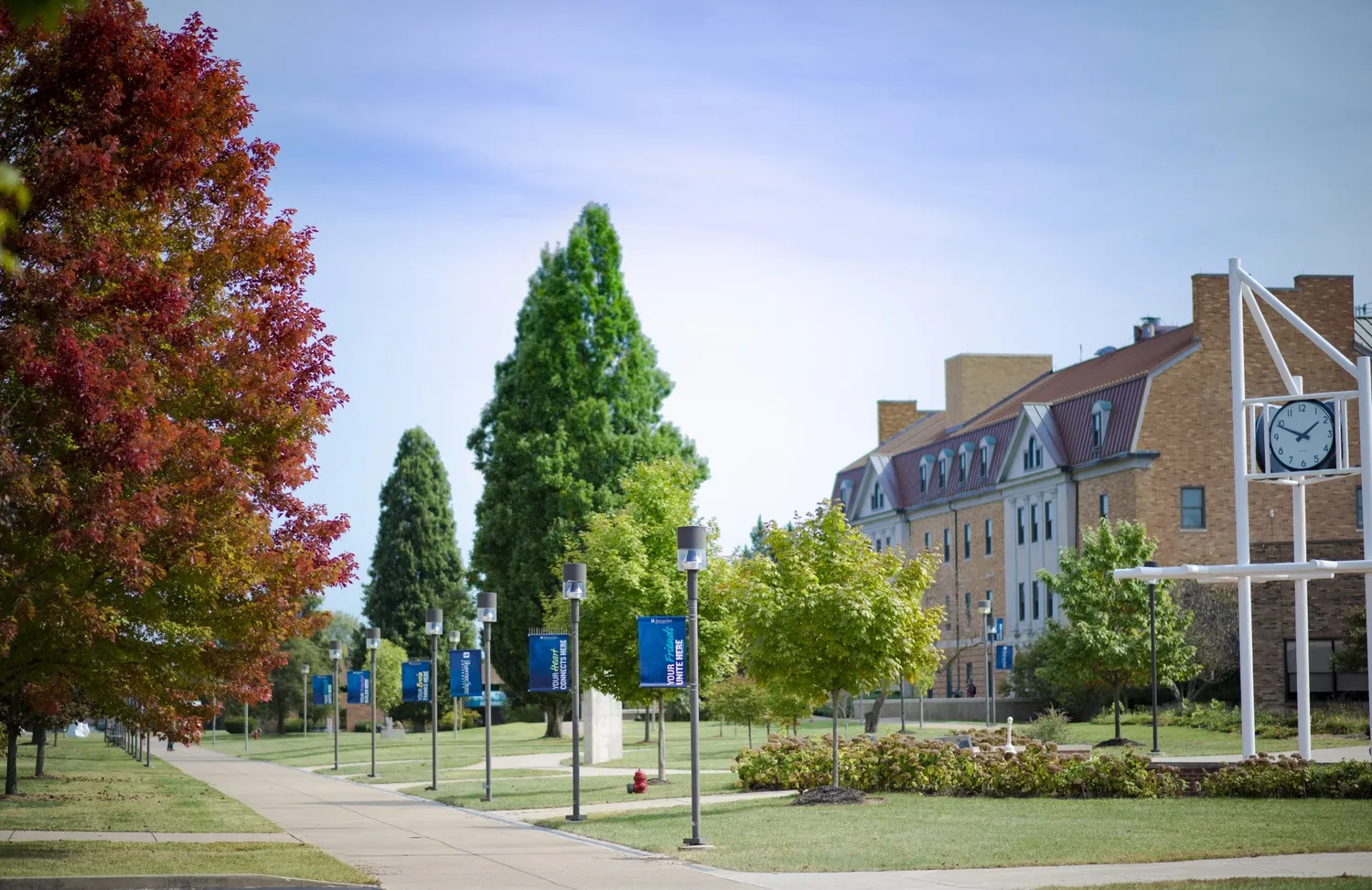
Botany coursework and labs are taught in Massie Hall on the Portsmouth campus, with field components in Southern Ohio's diverse ecosystems.
Botany Minor Frequently Asked Questions
Both. Taxonomy courses in particular get students outside identifying plants, and several elective options include applied field components.
Some courses can double-count, depending on your major. Confirm with your advisor before you register so you plan the right semesters.
No. You pick 6 hours from the list, which gives you flexibility based on the season courses are offered and what fits your interests.
